
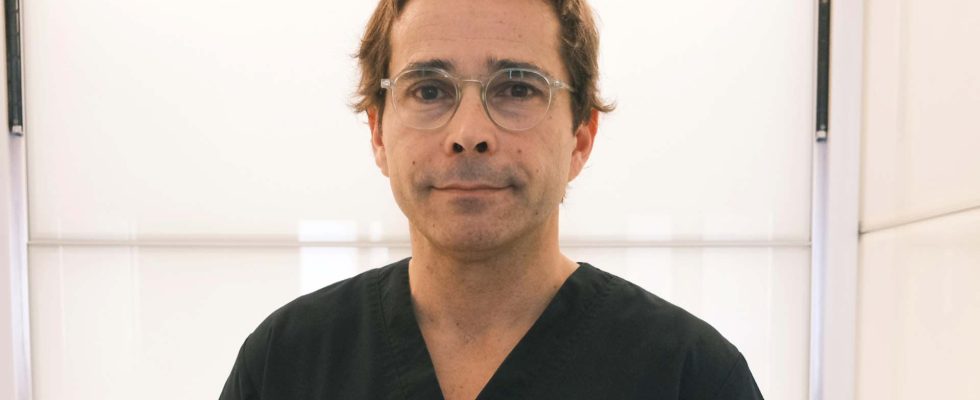
The evolution of teaching in recent years, which has become much more face-to-face and much more dynamic, has “forced” decision-makers in the sector to adapt. Ricardo Faria Almeida, coordinator of the Specialization in Periodontology and Oral Implantology course, cleared up some of the edges of this new specialization and the journey that began three years ago between the Portuguese Dental Association (OMD) and the Faculdade de Medicina Dentária da Universidade do Porto (FMDUP).
One of the aims of this specialization is to “provide the student with a conceptual update in the field of modern periodontology”. What has been this evolution?
Periodontology and oral implantology have evolved a lot in recent years. In terms of scientific knowledge and the techniques and materials that allow us to treat our patients more effectively, with better long-term results. But there has also been progress in terms of diagnosis, both in terms of scientific knowledge and advanced diagnostic techniques. Today we have more technology and more knowledge at our disposal, which allows us to be more effective in diagnosis and treatment, with less morbidity for patients. On the other hand, there is a greater awareness on the part of the population and the medical profession of the importance of periodontitis in other systemic pathologies, such as diabetes, cardiovascular problems, and dementia, among others. It is in this context of constant modernization, combining scientific knowledge with new materials and techniques, that the teaching of this specialization takes place.
What input does this specialization have into the student’s practical training?
This specialization complies with the guidelines issued at the national level by the Portuguese Dental Association and at the international level by the European Federation of Periodontology. So there is a theoretical and a practical component, which is the majority. We’re talking about colleagues who are dentists who have finished their integrated master’s degree and want to dedicate themselves specifically to one area. To perform predictably, in a scientifically proven way, they have to have a set of theoretical knowledge that is taught in this specialization. However, the practical part is fundamental for those who want a clinical qualification. It’s important to realize that the qualification is clinical and not an academic qualification. In this sense, we can say that the training is mostly clinical, which means that we’re talking about more or less 25% of the theoretical component, and the rest of the clinical component with patients.
What can future students expect from this specialization?
When you sign up for a specialization, you have to be passionate about what you want, you have to believe that this is the way to go. You have to think: “I want to make that area my life, so I’m willing to make a three-year effort to absorb as much as I can, to grow as much as I can. Then I have to keep fighting. Life is a continuous learning process and the only thing a specialization gives me is to be able to start at a slightly higher level because the information provided is organized in a way that is easier to learn”. From then on, you’re expected to continue working and to be a reference in that area, to continue doing good work, presenting at congresses, writing articles, in other words, to be someone that others can see as a reference in the field. That’s the main objective we try to instill. Fortunately, Portuguese dentistry is increasingly on the rise.
Read the full interview in DentalPro 177.

