
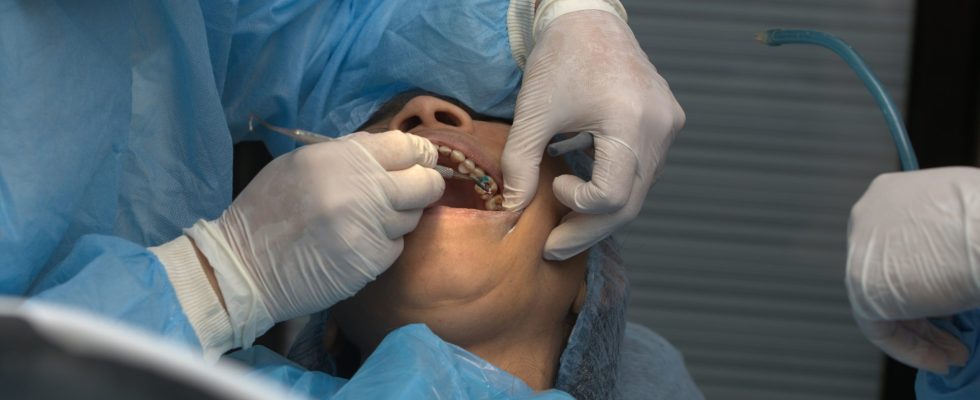
Portugal currently has 16,571 dentists registered with the Ordem dos Médicos Dentistas (OMD), about three times as many as two decades ago. Of these, 13,876 have active registration, representing a 174% increase compared to the 5,056 recorded in 2005. The data come from the 2026 special edition of “Os Números da Ordem” (“The Association’s Numbers”), which marks the 20th anniversary of the study and analyzes data reported as of December 31, 2025.
Regional Inequalities
The national ratio stands at 822 inhabitants per active dentist (121.7 per 100,000 inhabitants), below the World Health Organization’s reference range of 1,500 to 2,000 inhabitants per professional. The distribution, however, is highly uneven: in the Porto Metropolitan Area there is one dentist for every 557 inhabitants and in Greater Lisbon one for every 827, while in Alentejo Litoral the ratio rises to 2,287 and in Baixo Alentejo to 2,028. According to the study, 43.9% of the net growth over the past 20 years was concentrated in these two metropolitan areas.
Growing Emigration
Suspended registrations nearly quintupled, from 532 in 2005 to 2,583 in 2025, with a 7.3% increase in the last year alone. Practicing the profession abroad is the main reason (1,455 professionals, 56.3%), and 72.6% of suspensions are associated with leaving the country. France leads as a destination (387), followed by Italy (236), the United Kingdom (225) and Spain (193). The OMD stresses that this phenomenon includes both the emigration of Portuguese professionals and the return of foreign professionals trained in Portugal.
A More Female, Older and More International Profession
Women now represent 63.2% of active dentists (73.5% among those aged 35 and under), and the average age has risen from 35.8 to 42 years. Foreign professionals account for 32% of new registrations in 2025, compared with 8.5% in 2005.
Projections and Warnings
By 2029, projections point to 15,700 active dentists, with a ratio of 755 inhabitants per professional, which is expected to increase pressure on the labor market.
The President of the Association, Miguel Pavão, argues that the growth in the number of professionals “does not, by itself, solve the profession’s challenges” and calls for training planning and retention mechanisms that take territorial cohesion into account. He also considers that a dentistry career within the SNS (National Health Service) will be an important step, but advocates “a pact for oral health” among governments, politicians and leaders.
The OMD also advises prospective dentistry students to weigh the employability and working conditions in Portugal.

